
Key Takeaways
- •Early AI education is vital for preparing students for future challenges.
- •AI education nurtures skills such as critical thinking, problem-solving, and adaptability.
- •Empathy and leadership are essential in guiding responsible AI use.
- •Global awareness is enhanced through understanding AI’s diverse impacts.
Key Answer
Early AI education equips future leaders with critical thinking, digital literacy, and adaptability, fostering innovation from a young age.
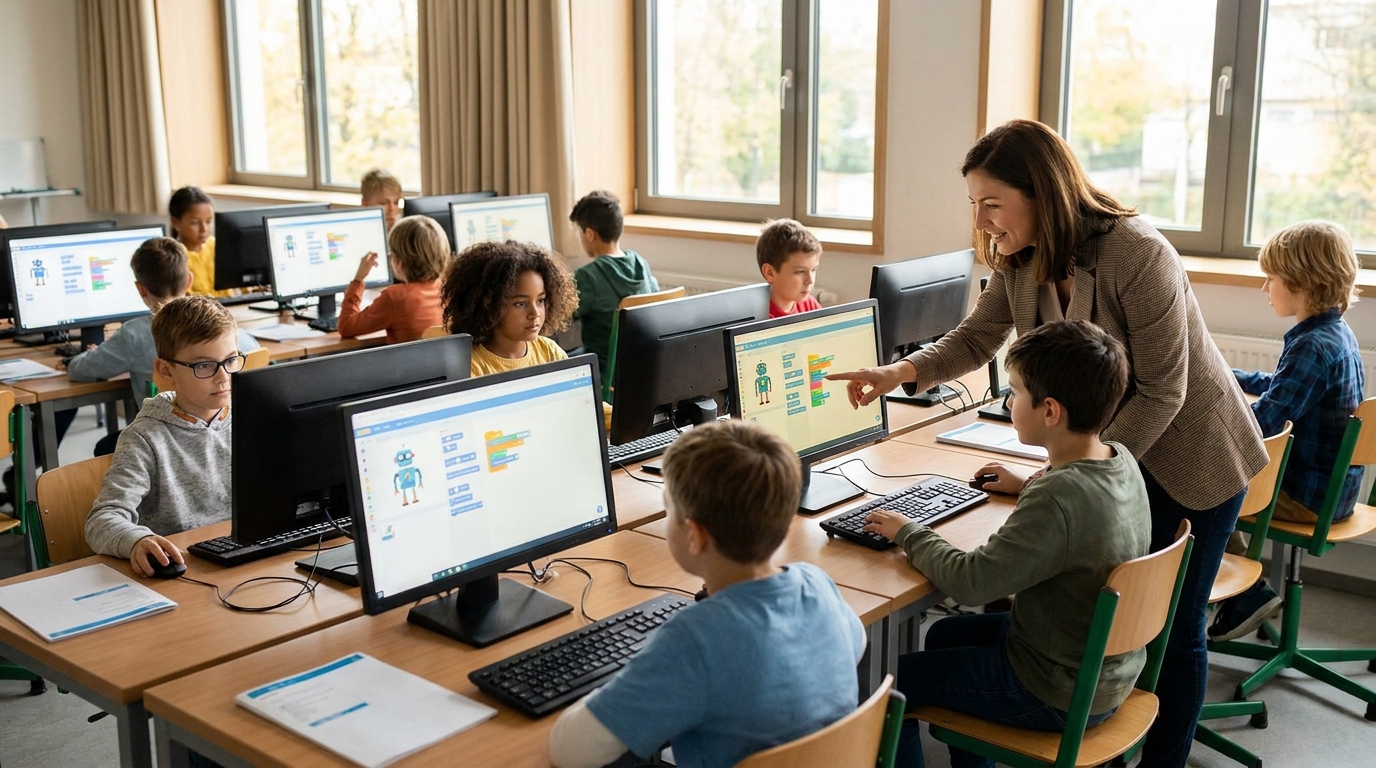
In today’s rapidly evolving educational landscape, Early AI Education is paramount in shaping the innovators of tomorrow. As technology continues to advance at an unprecedented pace, the need for educational systems to integrate AI education from an early age becomes increasingly critical. Early AI education not only equips students with the necessary digital literacy but also nurtures essential skills such as critical thinking, problem-solving, and creativity.
The Importance of Early AI Education
Integrating AI education into early schooling is not just about teaching coding or technical skills. It goes beyond this to develop a foundation of understanding how AI influences various sectors. With AI becoming a cornerstone of many industries, students who start early have a competitive edge. This early exposure prepares them to innovate and adapt in a world increasingly shaped by artificial intelligence.
By incorporating AI learning tools, educators can foster an environment where students enhance their problem-solving abilities. This approach encourages learners to think critically about the role of technology in society and the ethical implications of AI advancements. AI education thus serves as a bridge to understanding broader global challenges and innovations.
Critical Skills Developed Through AI Education
AI education from a young age encourages the development of key skills needed for future leadership. Critical thinking and problem-solving are at the forefront, as students learn to approach challenges methodically and innovate solutions. Additionally, digital literacy becomes a fundamental skill, with students gaining an understanding of AI technologies and their applications.
Moreover, the focus on creativity and innovation is significant. AI education encourages students to think outside the box, enabling them to devise innovative solutions to complex problems. By fostering an environment of experimentation and creativity, students learn to navigate challenges confidently and assertively.
Teamwork and collaboration are also essential skills developed during AI education. Working in groups, students can tackle projects that require diverse skill sets, promoting a collaborative spirit that is indispensable in today’s interconnected world.
Incorporating AI education early in the curriculum is not just about gaining technical skills but about shaping well-rounded individuals who can think critically and act responsibly in the face of technological advancements. This educational approach lays the groundwork for future leaders who can seamlessly integrate technology into society with a human-centric focus.
Adaptability and Resilience in an AI-Driven World
The ability to adapt quickly and demonstrate resilience in the face of rapidly changing technology is a critical outcome of AI education. Students are encouraged to embrace changes, view failures as learning opportunities, and persist through challenges. This adaptability is crucial as AI technologies continue to evolve, requiring constant learning and flexibility.
In addition to adaptability, global awareness is a vital component. By understanding the global impact of AI, students can appreciate cultural diversity and the varying implications of AI across different societies. This awareness prepares them to operate effectively in a globalised workforce.
Self-discipline and time management are further cultivated through structured AI learning projects, where students must balance multiple tasks and deadlines, honing their organisational skills.
Empathy and Leadership in the AI Era
As AI technologies develop, there is a heightened need for leaders who embody empathy and ethical responsibility. AI education highlights the importance of understanding the human impact of technological decisions, encouraging students to lead with empathy and social responsibility.
Leadership in the AI era is characterised by the ability to integrate technical prowess with interpersonal skills. Students are trained to lead teams, make informed decisions, and communicate effectively, ensuring that technology serves humanity positively and equitably.
This holistic approach to AI education ensures that future leaders are well-equipped to navigate and influence the AI landscape with a balanced perspective, integrating technical innovation with human-centric values.
Frequently Asked Questions
Early AI education is crucial as it equips students with essential skills like critical thinking, digital literacy, and adaptability, preparing them for an AI-driven future.
AI education develops critical thinking, problem-solving, digital literacy, creativity, teamwork, adaptability, and leadership skills among students.
AI education enhances global awareness by helping students understand the diverse cultural and societal impacts of AI, preparing them for a globalised workforce.
Empathy in AI leadership ensures that technology is used responsibly, focusing on the human impact of technological advancements, promoting ethical decision-making.
Yes, AI education promotes teamwork and collaboration by involving students in group projects, fostering a collaborative spirit and diverse skill set integration.