

Key Takeaways
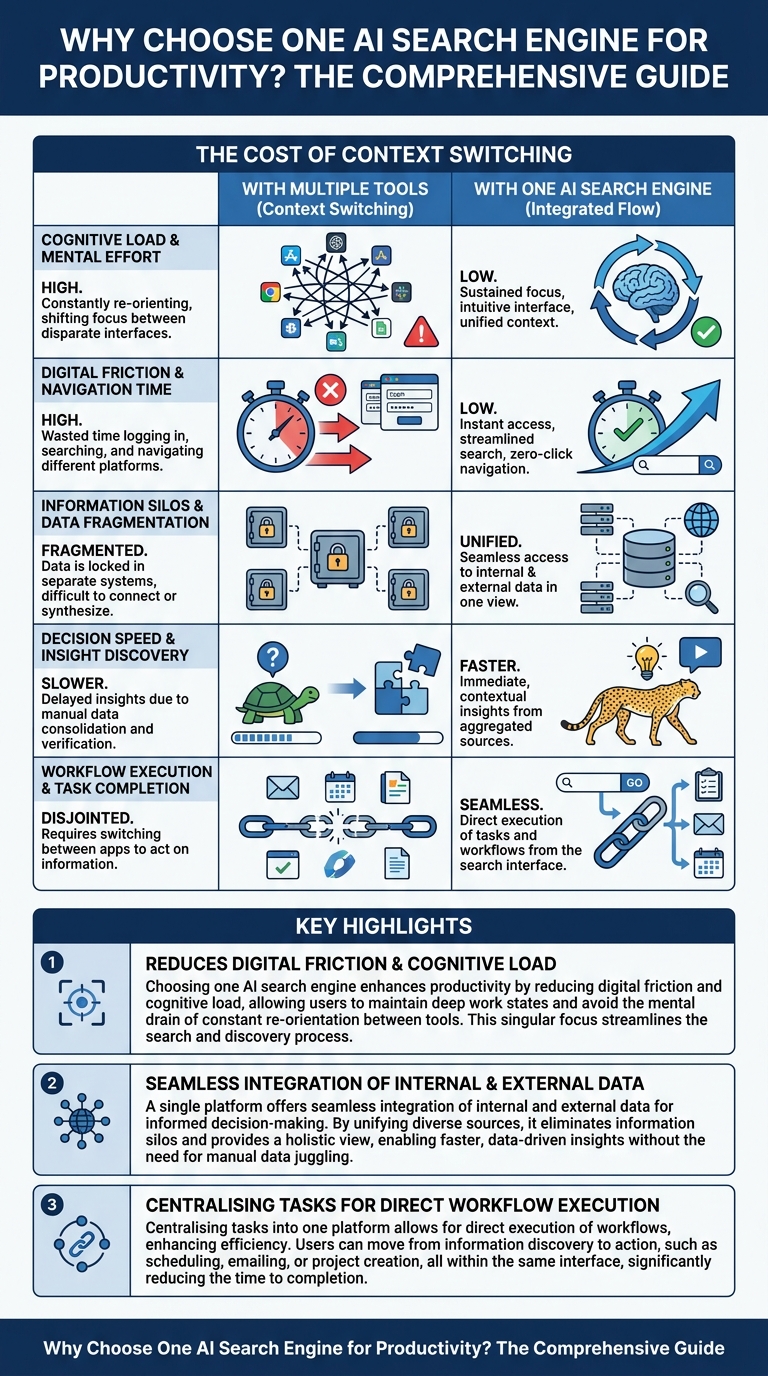
Choosing one AI search engine enhances productivity by reducing digital friction and cognitive load.
A single platform offers seamless integration of internal and external data for informed decision-making.
Centralising tasks into one platform allows for direct execution of workflows, enhancing efficiency.
Key Answer
Selecting one AI search engine for productivity minimises digital friction, optimises workflow, and enhances mastery of Generative AI. Avoid context switching by training a single platform.

Powered by iBeVisible.ai
In the ever-evolving landscape of artificial intelligence, productivity hinges on the efficient use of digital tools. This is particularly true for AI search engines, which have become indispensable for professionals seeking to maximise their output and streamline workflows. But with a plethora of options available, the question arises: Why choose one AI search engine for productivity?
This article delves into the multifaceted benefits of selecting a single AI search platform, discussing how it can reduce digital friction, optimise workflows, and ultimately enhance your mastery of Generative AI. We will also explore the potential drawbacks of switching between multiple platforms and provide actionable recommendations for making the best choice for your needs.
The Cost of Context Switching
The term ‘context switching’ refers to the mental load and time wasted when transitioning between different tasks or applications. In the realm of AI search engines, switching from one platform to another incurs this cost significantly. This is not merely a minor inconvenience; it can lead to reduced cognitive efficiency and interrupted flow states, which are critical for maintaining high productivity levels.
According to studies, each context switch can consume up to 23 minutes of productive time. For AI professionals, this translates to hours lost each week, simply due to navigating between tools. By choosing a single AI search engine, you consolidate your tasks within one interface, drastically reducing the cognitive load and enhancing focus.
Internal vs. External Knowledge Integration
One of the paramount benefits of selecting a single AI search engine is the ability to integrate both internal organisational data and external public information seamlessly. This integration creates a ‘Single Source of Truth,’ where all relevant data is accessible within one platform, fostering informed decision-making processes.
When using multiple AI tools, there’s a risk of fragmented data, which can lead to inconsistencies and errors. A unified AI search engine bridges the gap between private documents and public web resources, facilitating a coimprehensive view that enhances analytical capabilities and strategic planning.
Expert Perspective
AI Workflow Specialist
In my experience, the adoption of a single AI search engine significantly boosts productivity by creating a streamlined workflow environment. This approach not only simplifies data management but also protects against the fragmentation of valuable insights. However, users must ensure that the chosen platform meets all necessary functionality requirements to avoid missing out on specific niche features.
Eliminating Digital Friction
Digital friction refers to the obstacles and inefficiencies that arise when digital tools do not work in harmony. It often occurs when users juggle multiple platforms, each with its own unique interface and functionality. This friction can sap energy and time from professionals, diminishing their productivity.
By consolidating your AI tasks into one search engine, digital friction is minimised. This allows for a smoother workflow, where information retrieval and execution are streamlined, reducing the time spent on navigating disparate systems and focusing more on actionable insights.
Success Story
Streamlining Workflows with a Unified AI Search Engine
The Challenge
An Australian tech start-up faced productivity challenges due to fragmented data across multiple AI platforms. The team decided to consolidate their operations using a single AI search engine.
The Result
Within months, the start-up reported a 30% increase in productivity. The streamlined processes led to faster decision-making and reduced operational costs, demonstrating the effectiveness of a unified platform.
Actionable Output Workflows
Beyond just finding information, a single AI search engine can elevate your workflow by allowing you to execute tasks directly from the search interface. Imagine being able to auto-summarise internal meetings while simultaneously keeping abreast of industry trends, all within one system.
This capability transforms the AI search engine from a passive tool into an active productivity assistant, enhancing your ability to manage projects and deadlines efficiently. Such functionalities not only save time but also ensure that your output is consistently aligned with strategic objectives.
Quantifying Productivity Gains
The decision to commit to one AI search engine should also be backed by quantifiable metrics. It’s essential to establish a productivity framework that measures the actual time and resources saved by this consolidation. This involves calculating the minutes saved per query and evaluating how these efficiencies translate into broader organisational benefits.
A robust ROI calculator can provide insights into the economic advantages of using a single AI platform. By understanding these metrics, organisations can make informed decisions that align with their productivity goals and financial constraints.
Data Privacy and Security Considerations
Choosing one reputable AI search engine also offers significant data privacy and security benefits. With multiple tools, there is a heightened risk of exposure to ‘shadow AI’ applications that could compromise sensitive information.
A unified platform typically provides enhanced security measures, ensuring that intellectual property and confidential data are protected. This is crucial in maintaining trust and compliance with data protection regulations, which are increasingly stringent across industries.
Frequently Asked Questions
What is digital friction and how does it impact productivity?
Digital friction occurs when multiple digital tools are used inefficiently, leading to reduced productivity due to time lost in navigation and coordination.
How can a single AI search engine improve workflow?
A single AI search engine streamlines tasks by consolidating data access and task execution into one platform, reducing context switching and enhancing focus.
Are there any disadvantages to using only one AI search engine?
While a single platform reduces complexity, it might limit access to niche features available only in specialised tools. However, the benefits of reduced cognitive load often outweigh these limitations.
How can I measure the productivity gains from using one AI search engine?
Implement a productivity framework to calculate time savings and evaluate the broader organisational benefits through a robust ROI calculator.
What are the privacy benefits of a unified AI search engine?
A single platform offers enhanced security measures, reducing the risk of data exposure and ensuring compliance with privacy regulations.