

Key Takeaways
-
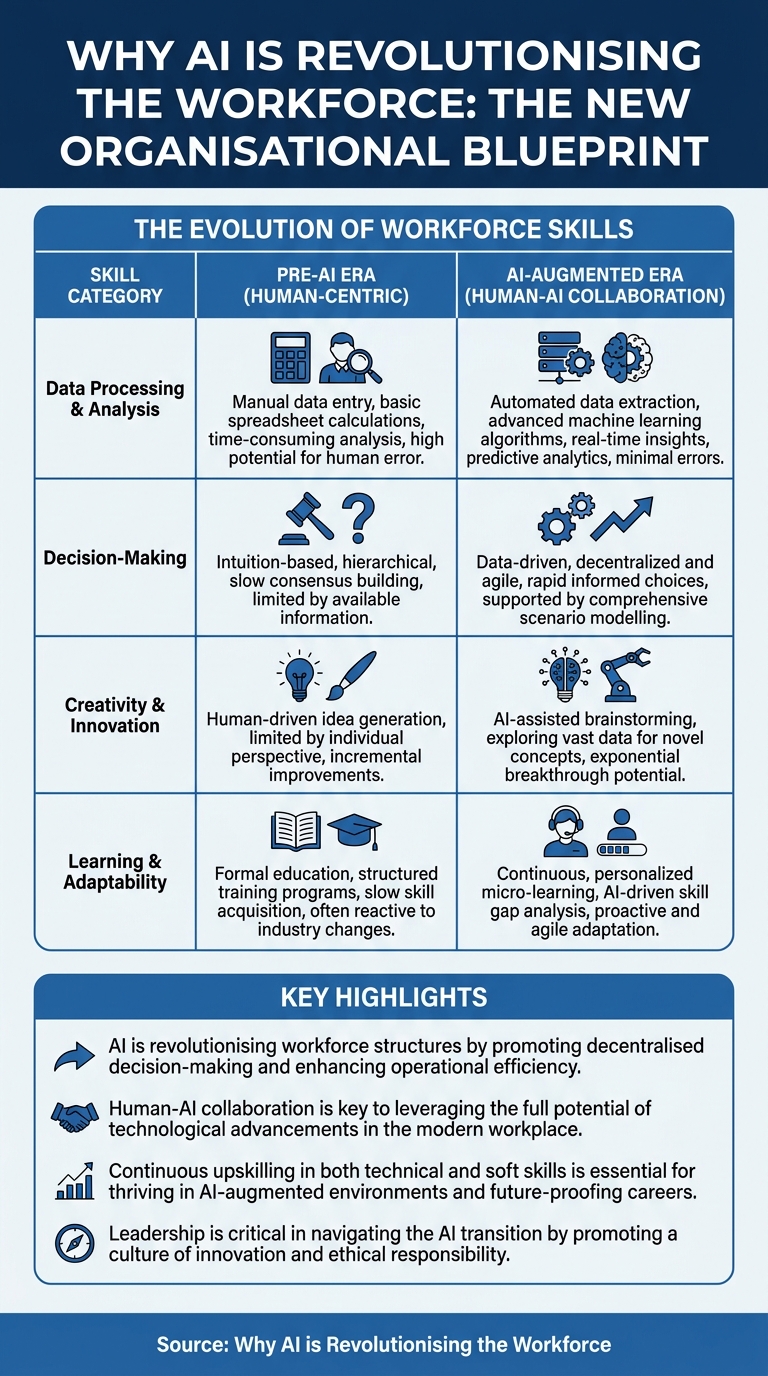
AI is revolutionising workforce structures by promoting decentralised decision-making and enhancing collaboration.
-
Human-AI collaboration is key to leveraging the full potential of technological advancements in the workplace.
-
Continuous upskilling in both technical and soft skills is essential for thriving in AI-augmented environments.
-
Leadership is critical in navigating the AI transition by promoting a culture of innovation and ethical AI practices.
Key Answer
AI is reshaping the workforce by redefining organisational structures and enhancing collaboration between humans and machines. This transformation rewards adaptability and human-AI synergy.
Powered by iBeVisible.ai
In today’s rapidly evolving digital landscape, understanding why AI is revolutionising the workforce is crucial for both individuals and organisations aiming to thrive. As the AI Age dawns, traditional notions of work and productivity are being redefined. No longer is technical prowess alone the hallmark of success. Instead, the ability to synergise human judgment with AI capabilities is emerging as the new competitive edge.
The Evolution of Workforce Skills
The evolution of workforce skills from the Industrial Age to the AI Age represents a significant shift in what it means to be a valuable contributor in any industry. During the Industrial Age, manual skills were paramount, as industries required human hands to drive machinery and operate processes. As we transitioned to the Computer Age, digital skills gained prominence, empowering workers to navigate and manipulate data and software effectively.
In contrast, the AI Age prioritises the ability to work effectively with AI. This involves not only understanding technical aspects but also leveraging AI to amplify human strengths. AI’s capacity to process vast datasets at lightning speed complements human creativity, intuition, and ethical judgment. As a result, workers are now expected to integrate these technologies seamlessly into their daily tasks, enhancing overall productivity and innovation.
AI Organisational Structures: A New Paradigm
AI is not just a tool–it’s a catalyst for creating new organisational structures. Unlike traditional hierarchies where decisions flowed from top management down, AI-driven organisations often function with a decentralised decision-making process. AI systems analyse data in real-time, providing insights that empower employees across all levels to make informed decisions swiftly.
This shift towards decentralisation is accompanied by an increase in collaborative environments. AI facilitates communication, bridging geographic and departmental divides, and enabling a cohesive work culture. Furthermore, AI-driven platforms can streamline operations by automating routine tasks, freeing up human capital to focus on strategic and creative endeavours.
AI
Expert Perspective
AI Workforce Strategist
The AI Age is redefining success in the workplace. Organisations that quickly embrace AI’s potential will find themselves at the forefront of innovation. The most successful employees will be those who can blend human insight with AI precision, making adaptability the most crucial skill of our time.
The Human-AI Collaboration Imperative
The narrative that AI will replace human jobs overlooks the transformative potential of human-AI collaboration. As AI systems become more integrated into workflows, the focus is shifting towards how these systems can enhance human potential rather than diminish it. Employees who embrace AI as partners in innovation, rather than competitors, are discovering new ways to enhance their productivity and job satisfaction.
Moreover, AI’s ability to perform repetitive and analytical tasks with precision allows humans to devote more time to roles that require emotional intelligence and strategic thinking. This synergy not only optimises efficiency but also fosters an environment where creativity and innovation can flourish. Organisations that harness this collaboration are poised to lead in the AI Age.
Upskilling: The Key to Staying Ahead
As AI reshapes organisational landscapes, the need for continuous upskilling becomes imperative. The skills required in the AI Age extend beyond technical prowess to include competencies in areas such as problem-solving, emotional intelligence, and adaptability. These skills enable individuals to navigate the complexities of AI-augmented environments effectively.
Structured upskilling programs are essential for fostering a workforce capable of leveraging AI’s full potential. Organisations must invest in training initiatives that emphasise not just technical training but also the development of critical soft skills. By doing so, they ensure their teams are equipped to adapt and thrive amidst the accelerating pace of technological advancement.
The Role of Leadership in the AI Transition
Leaders play a pivotal role in guiding their organisations through the AI transition. Their ability to champion a culture of learning and innovation directly impacts how effectively their teams adapt to AI-driven changes. Leaders must prioritise transparency and open communication, ensuring that employees understand the benefits and implications of AI integration.
By fostering a supportive environment that encourages experimentation and collaboration, leaders can cultivate an agile workforce ready to embrace new technologies. It’s crucial for leaders to demonstrate a commitment to ethical AI practices, ensuring that technology enhances human dignity and creativity while mitigating potential risks and biases inherent in AI systems.
Frequently Asked Questions
How is AI changing organisational structures?
AI is enabling decentralised decision-making and enhancing collaboration by providing real-time insights that empower employees across all levels.
What skills are most important in the AI Age?
The AI Age emphasises skills such as problem-solving, emotional intelligence, adaptability, and the ability to synergise with AI technologies.
How can organisations ensure a smooth AI transition?
Organisations should focus on continuous upskilling, fostering a culture of innovation, and maintaining open communication about AI’s benefits and challenges.
Will AI replace human jobs entirely?
While AI can automate certain tasks, it is more likely to augment human roles, particularly those requiring emotional intelligence and strategic thinking.
How can leaders effectively navigate the AI transition?
Leaders should champion a learning culture, promote ethical AI practices, and ensure transparency to help their teams adapt to AI-driven changes.