
Share this article

Table of Contents

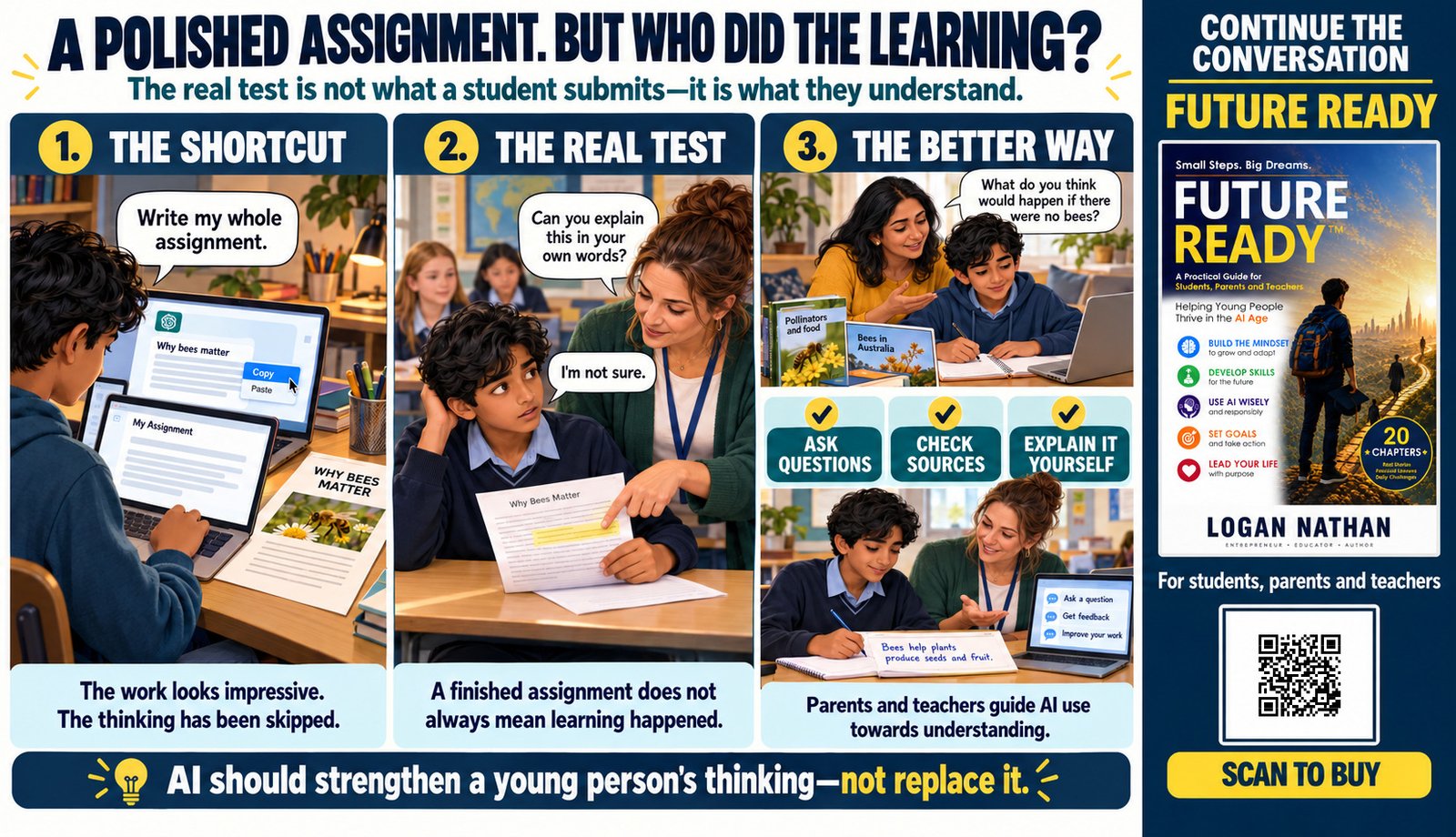
The Assignment May Look Impressive But Can the Student Explain It in Their Own Words?

The Assignment May Look Impressive But Can the Student Explain It in Their Own Words?

Table of Contents

Key Takeaways

  • Comprehension is more valuable than rote learning for long-term student success.

  • Evaluating student understanding requires diverse and innovative assessment strategies.

  • Helping students articulate their understanding enhances learning and retention.

  • Practical classroom strategies can foster environments conducive to genuine comprehension.

Key Answer

The assignment may look impressive but can the student explain it in their own words? Emphasising comprehension over rote learning ensures students truly grasp and articulate their knowledge, fostering genuine understanding and long-term academic success.

The assignment may look impressive, but can the student explain it in their own words? This challenge is pivotal in Australian education today, where the focus is shifting from rote learning to genuine comprehension. As educators, parents, and mentors, it’s crucial to understand how students can effectively demonstrate their grasp of knowledge beyond beautifully formatted assignments.

Impressive assignments with complex vocabulary and structured arguments often create the illusion of deep understanding. However, without the ability to explain these assignments in their own words, students may miss out on true learning. Our focus must shift towards strategies that ensure comprehension and the capacity for students to articulate their thoughts clearly and confidently.

Why Comprehension Outshines Rote Learning

In the educational landscape, comprehension reigns supreme. While rote learning might provide short-term results, it’s comprehension that guarantees long-term success. When students understand material at a fundamental level, they can apply knowledge in new contexts, engage in critical thinking, and solve complex problems. This deeper learning not only leads to higher academic achievement but also prepares students for life beyond the classroom.

Rote learning, on the other hand, often results in students memorising information for exams and quickly forgetting it thereafter. This approach doesn’t foster the skills needed for creative problem-solving or adaptive learning. Emphasising comprehension ensures that students can navigate the ever-evolving landscape of knowledge and technology, a crucial skill in Australia’s competitive academic environment.

Strategies to Evaluate Student Understanding

Evaluating whether a student can explain their assignment in their own words requires a different set of strategies. Traditional testing methods often fall short in assessing true comprehension. Instead, educators can use alternative methods such as open-ended questions, project-based assessments, and oral presentations to gauge understanding.

By encouraging students to discuss their assignments with peers and instructors, you foster an environment where they must articulate their reasoning. This not only highlights comprehension but also encourages collaborative learning — a key aspect of Australian education that values shared knowledge and collective improvement.

Incorporating reflective practices such as journals or self-assessment checklists can also provide insights into a student’s internalisation of the material. These tools allow students to express their understanding of concepts, helping educators identify areas that require further clarification or support.

Future Ready – Small Steps Big Dreams

Author Logan Nathan

The ability to articulate knowledge is the hallmark of true understanding in education. As educators, we must pivot from traditional rote learning approaches and embrace methods that prioritise comprehension and communication. This shift not only prepares students for academic success but also for a future defined by critical thinking and adaptability.

Encouraging Articulation of Thought

To truly ensure students are learning, educators must focus on helping students articulate their thoughts. This involves moving beyond simple right or wrong answers to more nuanced expressions of understanding. Encouraging students to teach back what they’ve learned to their classmates, known as the peer teaching method, is an effective way to reinforce learning and identify gaps in comprehension.

Another effective technique is the use of storytelling in education. By framing lessons within a narrative, students can relate personally to the material, making it more memorable and easier to explain in their own words. This method also taps into the creative and emotional dimensions of learning, essential for developing well-rounded students.

Furthermore, regular feedback sessions can serve as a platform for students to discuss their understanding, receive constructive criticism, and refine their articulation skills. These sessions should be a staple in educational practice, encouraging a continuous dialogue between students and educators about learning objectives and outcomes.

Implementing Practical Solutions in the Classroom

Integrating these strategies into the classroom requires practical steps. Begin by creating a supportive environment where students feel safe to express their ideas. This can be achieved by establishing open communication channels and valuing student input in class discussions.

Incorporate diverse assessment methods that go beyond traditional exams. This could include portfolios, peer reviews, and creative projects that require students to apply what they’ve learned in innovative ways. Through these methods, you can assess a student’s ability to internalise knowledge and articulate it effectively.

It’s also important to provide resources and training for educators to help them implement these strategies successfully. Professional development programs focusing on student-centred learning can equip teachers with the necessary tools to foster an environment where students are encouraged to explain their understanding in their own words.

Final Thoughts

As we navigate the modern educational terrain, asking “The assignment may look impressive, but can the student explain it in their own words?” becomes increasingly essential. For Australia to produce not just academically successful students but also thinkers and innovators, our education system must prioritise comprehension and articulation over superficial learning.

By empowering students to express their understanding in their own words, educators help cultivate a generation of independent thinkers ready to tackle the challenges of the future. Lessons learnt from Saturday’s challenging task remind us of the importance of integrating comprehension and articulation at the heart of education. This approach promises not just academic success, but a pathway to lifelong learning and adaptability in an ever-changing world.

FAQs: Enhancing Student Understanding

How can I tell if a student truly understands the material? Look for signs that they can explain concepts in their own words, apply knowledge in new contexts, and demonstrate critical thinking in discussions.

What methods can help students articulate their understanding? Encourage peer teaching, storytelling, and regular feedback sessions to foster articulation and comprehension.

What role does the teacher play in ensuring genuine learning? Teachers facilitate environments that support open communication, diverse assessments, and continuous feedback, promoting a culture of understanding and explanation.

Interactive Tools for Educators

To enhance the understanding and articulation of knowledge, consider integrating interactive tools. A comprehension quiz can help assess student understanding, while a storytelling tool could encourage creative expression and deeper engagement with the material. These resources not only enrich the learning experience but also provide educators with immediate feedback on student progress.

Interactive Tools for Educators

A copy of Logan Nathan’s ‘Future Ready – Small Steps Big Dreams’ – A practical guide for Students, Parents and Teachers. This is available online and book stores. For details visit https://futureready.logannathan.com

Frequently Asked Questions

Look for signs that they can explain concepts in their own words, apply knowledge in new contexts, and demonstrate critical thinking in discussions.

Encourage peer teaching, storytelling, and regular feedback sessions to foster articulation and comprehension.

Teachers facilitate environments that support open communication, diverse assessments, and continuous feedback, promoting a culture of understanding and explanation.

Rote learning often results in limited retention and doesn’t encourage critical thinking or problem-solving skills.

Articulation helps solidify students’ understanding by requiring them to express and explain concepts in their own words, thereby enhancing retention and comprehension.