
Key Takeaways
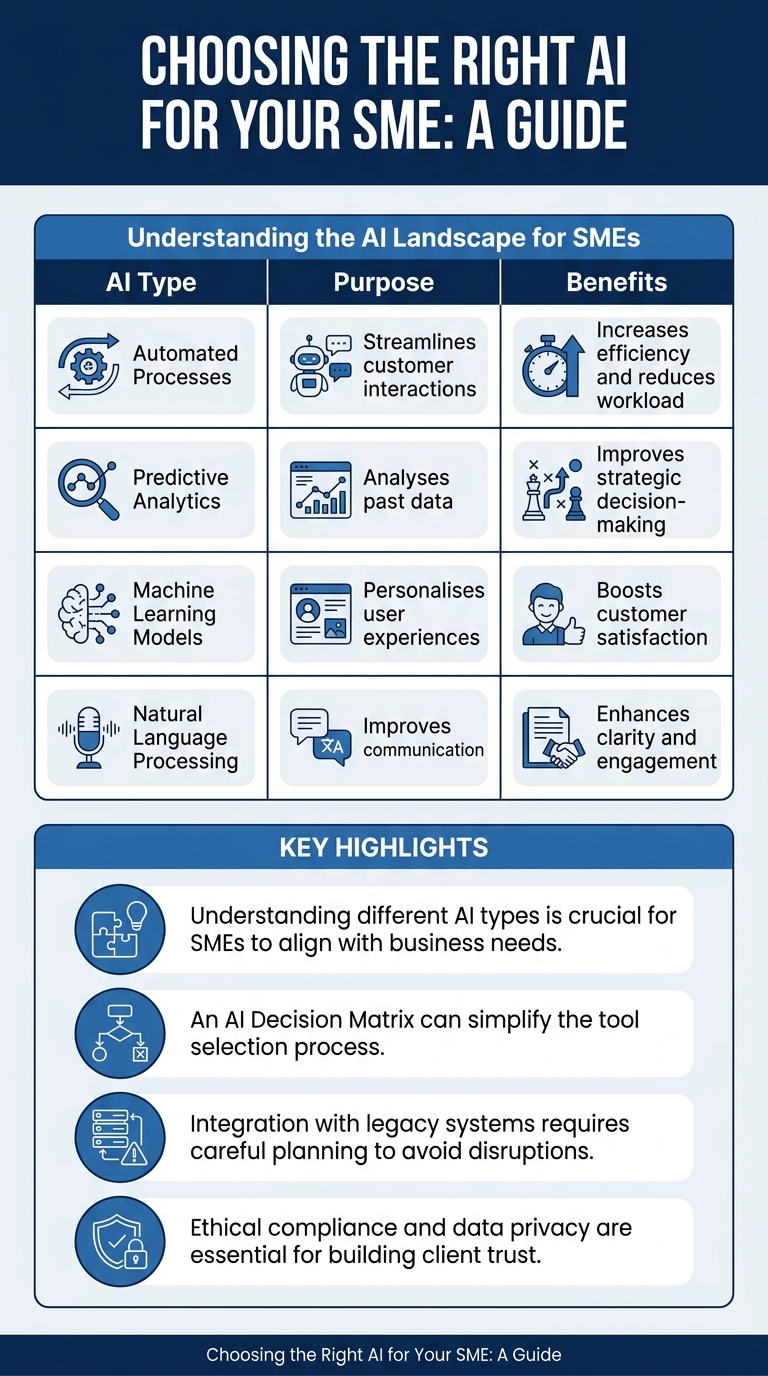
Understanding different AI types is crucial for SMEs to align with business needs.
An AI Decision Matrix can simplify the tool selection process.
Integration with legacy systems requires careful planning to avoid disruptions.
Ethical compliance and data privacy are essential for building client trust.
Key Answer
Choosing the right AI for your SME involves understanding your business needs, evaluating available tools, and ensuring integration with current systems. This guide simplifies the selection process with practical advice and a decision matrix.
In today’s rapidly evolving digital landscape, small and medium enterprises (SMEs) face unique challenges in adopting artificial intelligence (AI) to drive growth and efficiency. Choosing the right AI for your SME can be a daunting task, especially with the plethora of options available in the market. This guide provides a comprehensive look at how SMEs can select the most suitable AI tools for their specific needs, ensuring seamless integration with existing systems and maintaining compliance with emerging regulations.
Powered by iBeVisible.ai
Understanding the AI Landscape for SMEs
Artificial Intelligence offers a variety of tools tailored for different functions within an SME, from customer service automation to advanced data analytics. However, the key is to identify which AI tools align best with your business objectives. AI can be categorised into several main types relevant to SMEs:
Automated Processes: These include chatbots and virtual assistants that streamline customer interactions.
Predictive Analytics: Tools that analyse past data to predict future trends, crucial for strategic planning.
Machine Learning Models: Used for personalising user experiences and improving product recommendations.
Natural Language Processing (NLP): Enhances communication tools by understanding and generating human language.
By understanding these categories, SMEs can better grasp which technologies will bring the most value to their operations.
Selection Toolkit: Evaluating AI Tools
Choosing the right AI tool requires a structured approach. Start by conducting a thorough needs assessment to understand the gaps in your current processes. From there, SMEs can use an AI Decision Matrix to objectively evaluate potential tools. This matrix should consider criteria such as cost-effectiveness, scalability, ease of integration, and vendor support.
A typical AI Decision Matrix might include the following parameters:
Cost-Effectiveness: Evaluate the total cost of ownership against potential returns.
Scalability: Ensure the tool can grow alongside your business.
Integration Capabilities: Check for compatibility with existing systems like CRMs or Excel workflows.
Vendor Support and Reputation: Consider the track record and customer service offered by the AI provider.
By utilising this decision-making framework, SME leaders can make informed choices that align with both current needs and future growth.
Expert Perspective
AI Integration Specialist
In the fast-paced world of AI integration, SMEs must prioritise understanding their unique business needs before diving into the vast pool of AI tools available. The strategic use of an AI Decision Matrix can be pivotal in selecting tools that provide real value and scalability. Moreover, ethical compliance and data privacy cannot be an afterthought; they are essential pillars for sustainable AI deployment.
Integration Architecture for Legacy Systems
Many SMEs rely on legacy systems that have been built up over time, making seamless integration with new AI tools a challenge. Successful integration involves understanding the architecture of existing systems and finding AI solutions that can complement them without causing disruptions.
To achieve smooth integration:
Conduct a System Audit: Identify all existing systems and their functionalities.
Choose Compatible AI Solutions: Select AI tools that are compatible with your current IT infrastructure.
Use Middleware: Employ middleware solutions to facilitate communication between AI tools and legacy systems.
Test and Iterate: Implement AI solutions on a small scale initially to test their efficacy before full-scale deployment.
By carefully planning the integration process, SMEs can avoid common pitfalls and ensure that AI tools enhance their operations rather than complicate them.
Ethical Compliance and Data Privacy
As AI becomes more prevalent in business operations, adhering to ethical guidelines and data privacy regulations is paramount. The emerging UK/EU AI Acts highlight the importance of responsibly managing client data and ensuring transparency in AI processes.
SMEs should consider the following steps to ensure compliance:
Data Protection Policies: Establish robust data protection measures to safeguard client information.
Regular Audits: Conduct regular audits to ensure AI tools comply with current regulations.
Transparency and Accountability: Maintain open communication with stakeholders about how AI is utilised in your business.
Training and Awareness: Educate employees about the importance of data privacy and ethical AI use.
By embedding these practices into their operations, SMEs can not only comply with regulations but also build trust with their clients.
Avoiding Vendor Lock-in and Ensuring Data Portability
Vendor lock-in is a significant concern for SMEs investing in AI technologies. It occurs when an SME becomes dependent on a single vendor’s ecosystem, making it costly or difficult to switch providers in the future. To mitigate this risk, consider the following strategies:
Choose Open Standards: Opt for AI tools that support open standards, ensuring easier integration and flexibility.
Negotiate Contract Terms: Ensure contracts include clauses on data portability and exit strategies.
Regular Evaluations: Periodically reassess AI tools to ensure they still meet your evolving business needs.
These strategies help SMEs maintain flexibility and avoid being trapped in restrictive agreements, allowing them to adapt to market changes more effectively.
Frequently Asked Questions
What is an AI Decision Matrix?
An AI Decision Matrix is a framework used to evaluate and compare AI tools based on criteria like cost, scalability, integration, and vendor support.
How can SMEs ensure AI compliance?
SMEs can ensure AI compliance by establishing data protection policies, conducting regular audits, and maintaining transparency in AI applications.
What are the risks of vendor lock-in?
Vendor lock-in risks include dependency on a single vendor and difficulties in switching providers. To avoid this, choose open standards and negotiate flexible contract terms.
Why is AI integration important for legacy systems?
Integrating AI with legacy systems is important to ensure seamless operations and avoid disruptions. It involves choosing compatible AI tools and using middleware solutions.
How can SMEs use predictive analytics?
SMEs can use predictive analytics to analyse historical data and forecast future trends, aiding in strategic planning and decision-making.