
Key Takeaways
Identify business pain points before choosing an AI tool.
Focus on automating repetitive tasks for quick wins.
Leverage existing technology to minimize costs and integration hurdles.
Measure AI’s success using clear metrics to guide future projects.
Key Answer
Kickstart your AI journey by automating repetitive tasks. Choose a project that aligns with existing technology and measures success in time saved and errors reduced.
When considering AI for your business, the initial question is vital: what’s the first AI project that will give me the quickest return? The key lies not in diving straight into technology but in identifying the most significant business pain that AI can alleviate. For many small to medium-sized enterprises (SMEs), this means homing in on repetitive, time-consuming tasks that drain resources and slow growth.
As someone who’s navigated the AI landscape, I can tell you that the promise of AI is real, but it requires starting with the right focus. Whether it’s automating customer service inquiries, speeding up invoice processing, or smoothing out scheduling hiccups, the first AI project should target a tangible pain point with a clear path to improvement.
Identifying the Pain Points
Start your AI journey by identifying the pain points within your business. These are the areas where time, money, and resources are being drained with little return. Common culprits include repetitive tasks like data entry, manual scheduling, and standardised email responses. These activities not only consume valuable time but are also prone to human error, resulting in delays and inaccuracies that frustrate customers and staff alike.
In my experience, understanding where your business struggles the most is the first step towards effective AI integration. By pinpointing these bottlenecks, you can begin to see where AI can make an immediate impact. This approach not only addresses inefficiencies but also creates a more strategic and streamlined workflow for your team.
The Power of Repetitive Tasks
Repetitive tasks are a goldmine for AI automation. These tasks often occupy a significant portion of your team’s time but add little value to the overall business goals. Automating them not only increases efficiency but also frees up staff to focus on higher-level, strategic work.
Consider the amount of time spent on tasks like data entry or generating standard reports. These tasks are ripe for AI intervention. For example, AI tools can automate the process of sifting through data, inputting information accurately, and even generating reports that require minimal oversight. This shift not only boosts productivity but also enhances data accuracy, which is crucial for informed decision-making.
Expert Perspective
AI Business Transformation Specialist
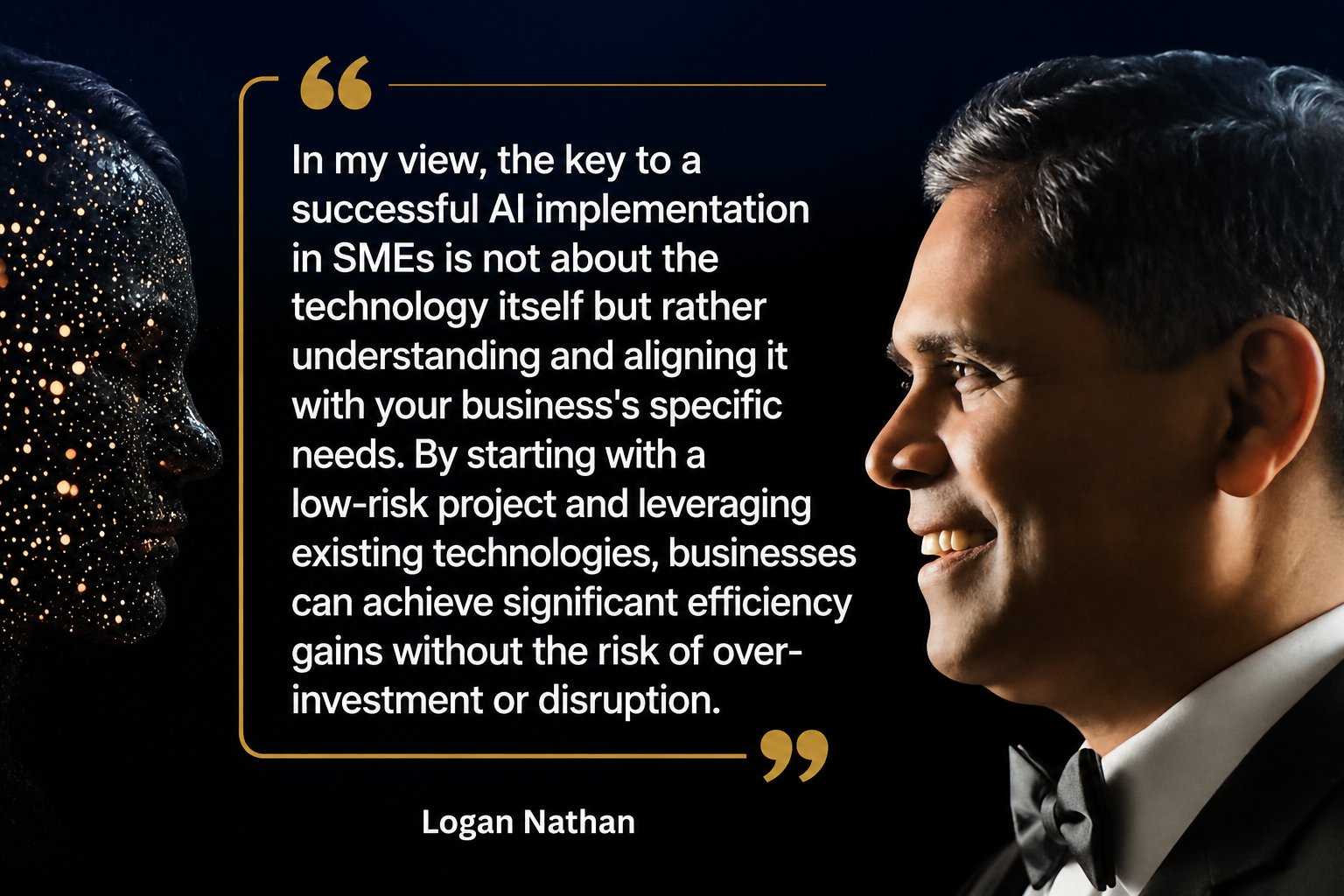
In my view, the key to a successful AI implementation in SMEs is not about the technology itself but rather understanding and aligning it with your business’s specific needs. By starting with a low-risk project and leveraging existing technologies, businesses can achieve significant efficiency gains without the risk of over-investment or disruption.
Choosing a Small, Low-Risk AI Project
Embarking on your AI journey doesn’t mean transforming your entire business overnight. Instead, choose a small, low-risk project that targets a specific problem, such as automating email responses or scheduling. This approach allows you to experiment with AI in a controlled environment, reducing the risk of disruption while providing valuable insights into the technology’s capabilities.
I advocate for starting with technologies you already use, such as leveraging AI features within your existing CRM or accounting software. By doing this, you can integrate AI without the cost or complexity of new systems, ensuring that your first project is both cost-effective and impactful.
Streamlining Before Automating
Before applying AI, it’s crucial to streamline and simplify existing processes. Automating a flawed process only amplifies its inefficiencies. Conduct a thorough review of your workflows to ensure they are as efficient as possible before introducing AI.
Mapping out your current processes helps identify areas of unnecessary complexity or redundancy, making it easier to see where AI can be best applied. This step ensures that the benefits of AI–such as increased speed and accuracy–are fully realized without the burden of existing inefficiencies.
Leveraging Existing Technology
Start with the technology you already have. Your current CRM or accounting software might already include AI capabilities that you’re not fully utilizing. These platforms often offer AI-driven features designed to automate and streamline processes without the need for significant investment.
In my guide on how to properly integrate AI workflows, I emphasize using familiar tools to your advantage. This not only reduces learning curves but also maximizes the return on your existing investments, making your first AI project a strategic enhancement rather than a drastic overhaul.
Measuring Success and Building Momentum
Once your initial AI project is underway, measure its success by comparing it to the established baseline. Metrics such as time saved, cost per task, and error reduction are key indicators of AI’s impact. This data not only highlights the immediate benefits of AI but also provides a foundation for future projects.
It’s essential to maintain human oversight in areas where judgment is critical. AI should support decision-making, not replace it. This ensures a balanced approach where AI enhances human capabilities without overshadowing them.
Creating an AI Roadmap for the Future
Your first successful AI project should pave the way for future initiatives. After proving the value of AI with a small project, expand into other areas where repetitive tasks and bottlenecks exist. This iterative approach allows you to gradually increase AI’s role in your business, building on each success to drive greater efficiency and innovation.
In crafting an AI roadmap, consider the areas of your business that will benefit most from automation. Focus on processes that are repetitive, data-intensive, and currently a drain on resources. This strategic approach ensures that each AI project builds on the last, creating a cohesive and transformative business strategy.
Interactive Ideas for Your AI Projects
To further your understanding and application of AI, consider incorporating interactive tools. A simple AI readiness calculator can help assess where your business stands and identify areas ripe for AI integration. Similarly, a quiz could assist in determining which AI tools align best with your specific business needs.
These interactive elements not only engage your team but also provide a practical framework for understanding AI’s potential in your organization. By making AI more accessible and relatable, you empower your business to adapt and innovate with confidence.
Frequently Asked Questions
Starting with a small AI project minimizes risk and allows you to gauge AI’s impact on your business. It’s a practical way to test capabilities and achieve quick wins without major disruptions.
Success is measured by comparing baseline metrics such as time savings, cost reduction, and error rates with post-AI implementation metrics. This comparison provides a clear picture of AI’s benefits.
Yes, many existing technologies like CRM and accounting platforms have AI capabilities. Utilizing these can streamline adoption and enhance your current processes with minimal investment.
Tasks that are repetitive, time-consuming, and prone to error are ideal for AI automation. These include data entry, email responses, and scheduling.
An AI roadmap begins with a successful small project and expands to other areas with similar needs. It involves strategic planning and prioritizing high-impact tasks for AI integration.