Table of Contents
In 2024, I knew AI mattered.
I followed the updates, read the threads, tested a few tools, and nodded along when people said, “AI is the future.”
And that is exactly what I got wrong.
I treated AI as something to watch, not something to practise.
Awareness felt productive. In reality, it was polite procrastination; the kind that looks responsible while keeping you perfectly still.
Back then, I told myself I was being sensible. I didn’t want to fall for hype. I didn’t want to waste time learning tools that would be obsolete in a month. I didn’t want to build my work around something I didn’t fully understand.
All fair reasons. Also, all excellent excuses.
Because while I was “staying informed”, other people were building fluency. They weren’t waiting for certainty. They were getting reps in, messy ones, imperfect ones, but reps all the same.
I wasn’t behind because I lacked information.
I was behind because I wasn’t doing the work.
The mistake I didn’t see at the time
Looking back, my biggest error wasn’t intelligence, access, or tools.
It was the focus.
In 2024, I carried a few quiet beliefs that felt true, but weren’t:
- Staying informed = staying relevant
- Trying tools occasionally = learning
- Waiting for clarity = being cautious
What I didn’t realise then is simple:
AI doesn’t reward curiosity alone. It rewards commitment.
Not because the technology cares, but because capability compounds. You don’t become good at working with AI by reading about prompts. You become good by using it often enough that you learn what to ask, what to ignore, and how to steer it back on track when it drifts.
What changed everything in 2025
2025 was the year I stopped sampling AI and started working with it daily.
There was no big announcement. No perfect system. No dramatic turning point.
Just a quiet decision:
AI would become part of how I think, not just what I use.
That single shift changed everything.
In 2024, my question was usually, “What tool should I try next?”
In 2025, it became, “How do I think better with AI today?”
That change moved me from collecting tools to building a skill. And once it became a habit, progress started to compound in ways I could actually feel, not as hype, but as output.
Proof of learning, not theory
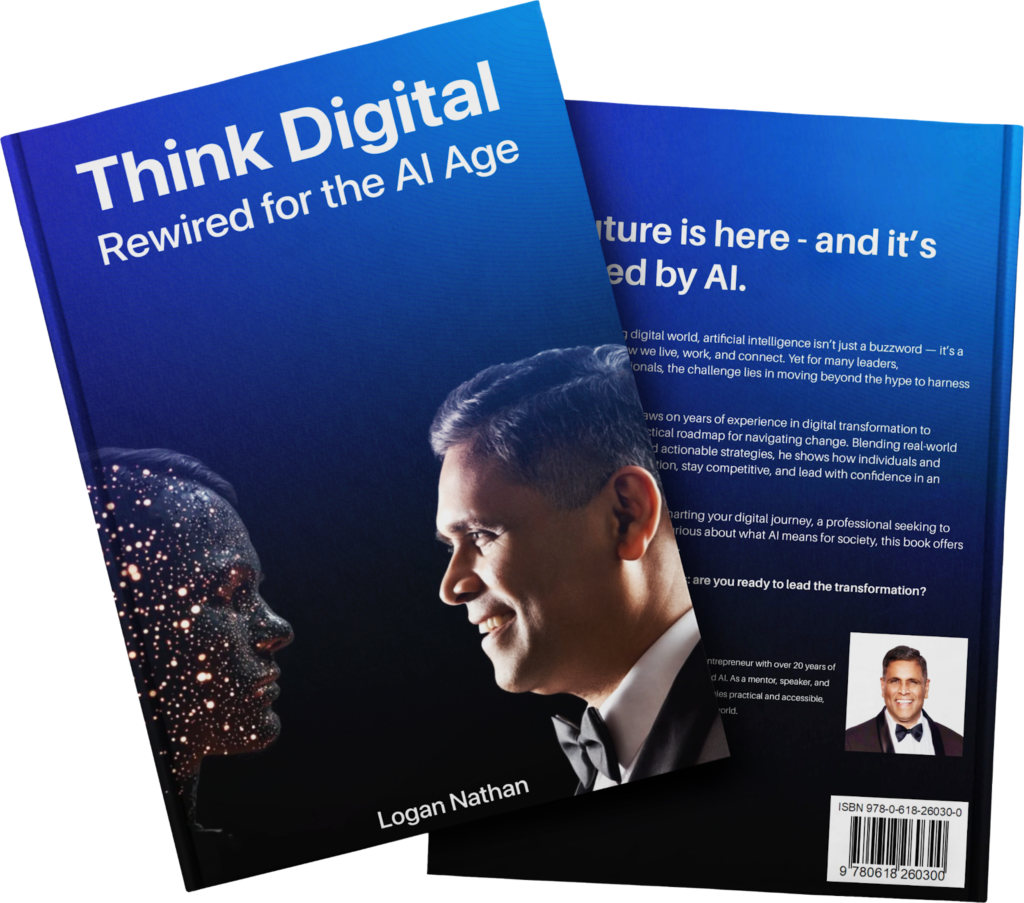
Real learning leaves receipts. For me, 2025 left three.
A book that came from practice, not hype
Think Digital – Rewired for the AI Age wasn’t written about AI trends.
It was written with AI as a thinking partner.
I didn’t want a book that would age out the moment the next model launched. I wanted something practical for professionals who know they need to adapt, but don’t have time to live inside AI news cycles.
So I used AI the way I now recommend using it: as a collaborator, not a ghostwriter.
It helped me to:
- Structure ideas when my thinking was messy
- Pressure-test arguments without losing my voice
- Move from blank page to workable draft faster, then refine with intent
Some sessions were clunky. Some outputs were confidently wrong. But that was part of the point: I wasn’t trying to be entertained by AI. I was trying to work with it.
And the book became tangible proof of a simple truth:
Consistent AI thinking beats occasional experimentation.
Creative flow without the drama
The second receipt surprised me. I started using AI for lyrics, reflections, and short creative pieces, not to replace creativity, but to unlock momentum.
Most creative blocks aren’t a lack of ideas. They are too many ideas, too much self-editing, or a blank page that feels heavier than it should.
AI helped by giving me something to respond to: a starting shape, a rough version, a counterpoint. Not “the answer”, but a nudge that made the next decision easier.
The real skill wasn’t “writing lyrics with AI”. It was:
- Giving clear context (what I’m trying to express, what I’m not)
- Iterating calmly instead of chasing a perfect first output
- Knowing when to stop refining and commit
That’s not a tool trick. That’s a thinking skill.
Videos, visuals, and systems that stick
The third receipt was about repeatability.
AI became my behind-the-scenes producer: shaping video narratives, drafting hooks and captions, and translating long-form ideas into visual-first content.
The breakthrough wasn’t “more content”. It was clearer messaging across formats; the same idea, expressed cleanly as a post, a script, a slide, or a short video.
Once I had a simple workflow (idea → outline → script → edit notes → captions), the friction dropped. And when friction drops, consistency becomes possible.
What I actually learned - this surprised me
By the end of 2025, I realised I hadn’t really learned AI tools.
I had learned AI skills.
Tools are surface area. Skills are leverage. The ones that mattered most were:
- Asking better questions
- Providing context and constraints
- Iterating instead of chasing perfection
- Designing repeatable workflows
- Knowing when to trust AI, and when to override it
These skills compound. Tools expire. Skills don’t.
It’s the difference between memorising menu items and learning to cook.
Why this matters if you’re reading this in 2026
If you’re thinking, “I should probably get serious about AI this year,” or “I feel behind,” let me say this plainly:
You are not late. You’re early enough to do it properly.
One year of deliberate focus will outperform five years of casual interest. Not because you’ll find the perfect tool, but because you’ll build habits that make any tool useful.
A simple invitation
If I could rewind to early 2025, I would tell myself:
Don’t chase tools. Build habits.
Don’t wait for confidence. Practise until it arrives.
Don’t outsource your thinking. Upgrade it.
Why?
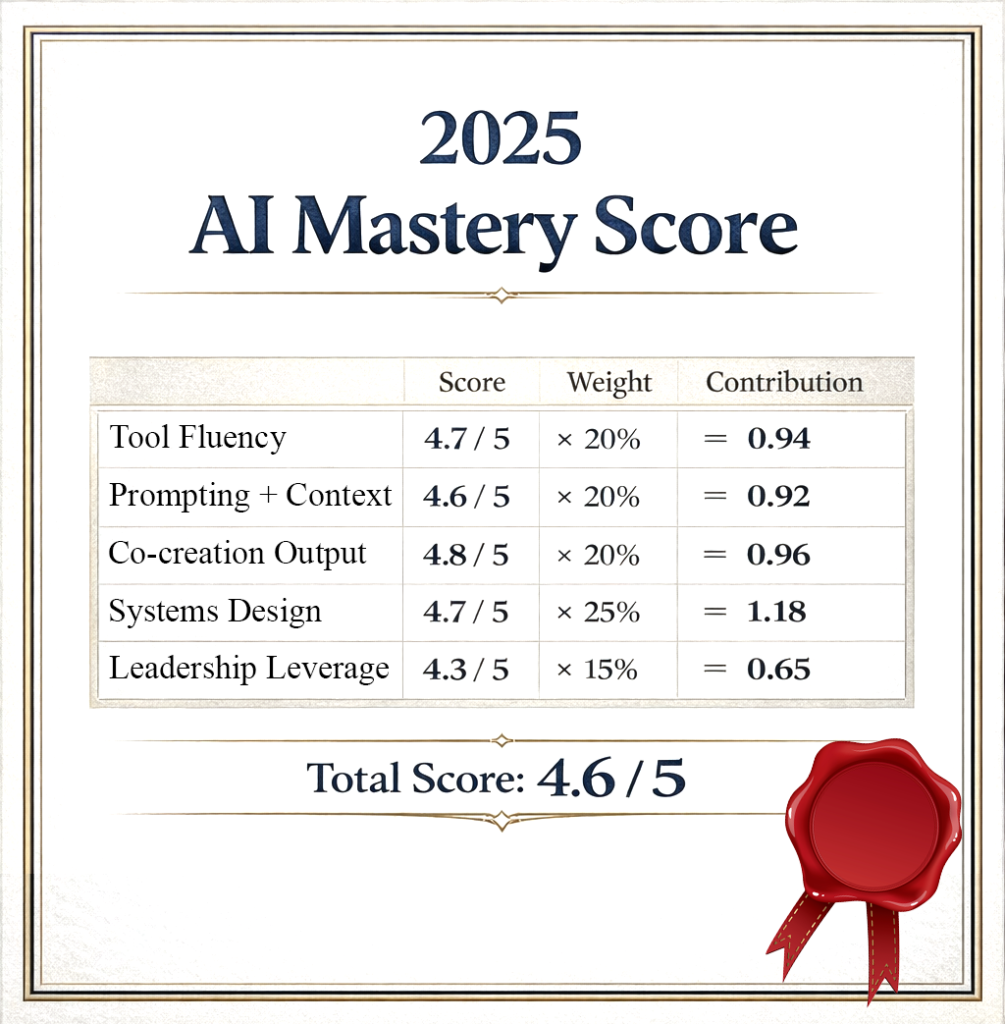
By the end of 2025, my own AI skills had a clear trajectory: I moved from tool user to co-creator to AI orchestrator, building repeatable workflows instead of just writing prompts.
That shift pushed my “AI Mastery” score to 4.6/5, reflecting high leverage at a leadership and execution level, even without model-layer engineering.
So here’s my suggestion to you:
Treat 2026 as your AI Year One.
Pick one or two real workflows you already do, writing, planning, analysing, presenting, selling, designing, and weave AI into them daily for 30 days. Keep notes on what works. Notice what surprises you. Adjust, repeat.
Document where you are now. Revisit it in 12 months.
You’ll be surprised, not by how much AI changed, but by how much you did.
Because a year from now, you won’t remember the tools you tried.
You’ll remember the habits you built.
And if you want a practical guide to help you build those habits without drowning in hype, that’s exactly why I wrote Think Digital – Rewired for the AI Age.